

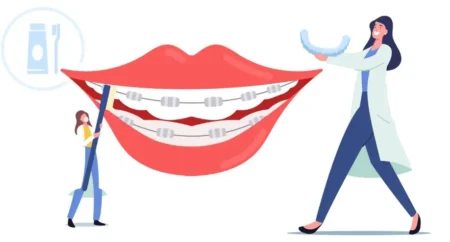
Braces aren’t just about straight teeth. They’re about how your bite works, how pressure is distributed, and how your jaw moves. When teeth are misaligned, chewing becomes uneven, enamel wears faster, gums suffer, and the jaw works harder than it should. Braces correct these patterns gradually, not instantly, by guiding teeth into positions where the whole system functions better.
Braces Change Bone Not Just Teeth
Teeth don’t float freely. They sit in bone, held by ligaments that respond to pressure. Braces apply gentle, constant force that tells the body to remodel bone over time. Bone dissolves slightly where pressure increases and rebuilds where space opens. This process is slow on purpose. Speed causes damage. Gradual change creates stability.
Different Types Serve Different Needs
Metal braces are still widely used because they’re strong and precise. Ceramic braces work similarly but blend in visually. Clear aligners offer flexibility and removability but rely heavily on patient consistency. Lingual braces hide behind teeth but require more adaptation. No option is universally better. The best choice depends on bite complexity, lifestyle, and discipline.
Discomfort Is Part Of Adaptation Not Damage
Braces don’t usually cause sharp pain. They cause pressure and soreness, especially after adjustments. That sensation means movement is happening. It fades as the body adapts. Severe pain or persistent discomfort isn’t normal and should be checked. Braces work through controlled stress, not force.
Oral Hygiene Becomes Non-Negotiable
Braces create more places for plaque to hide. Without careful cleaning, cavities and gum inflammation develop faster. Brushing technique, flossing tools, and regular professional cleanings matter more during orthodontic treatment than before. Straight teeth mean nothing if the surrounding tissue suffers.
Eating Habits Have To Adjust
Hard, sticky, or chewy foods can damage brackets and wires. That doesn’t mean life stops. It means awareness increases. Cutting food into smaller pieces and choosing softer textures protects the hardware and keeps treatment on track. Most breakages happen from inattention, not accidents.
Braces Affect Speech And Muscles Briefly
Speech changes slightly at first because the tongue and lips adapt to new structures. This passes quickly. Jaw muscles may feel tired as bite patterns shift. That’s part of recalibration. The mouth is learning a new default position.
Treatment Time Depends On Cooperation
Braces don’t work alone. Consistency matters. Missed appointments, broken brackets, ignored instructions extend treatment time. Clear aligners especially depend on wearing them as prescribed. Orthodontics is a collaboration, not a passive process.
Retainers Decide Whether Results Last
Braces move teeth. Retainers keep them there. Teeth have memory. Without retention, they drift back. Wearing a retainer as instructed is what turns temporary alignment into permanent change. Skipping this step wastes all the effort that came before.
Braces Are About Long-Term Health
Straight teeth are easier to clean, distribute pressure evenly, and reduce jaw strain. The benefits go beyond appearance. Orthodontic treatment improves function, comfort, and durability of the entire oral system.
The Real Value Shows Up Years Later
The biggest payoff from braces isn’t immediate. It shows up years later when teeth still align, gums stay healthier, and chewing feels natural. Braces are a commitment to future comfort, not just present aesthetics.
Picture Credit: Freepik