

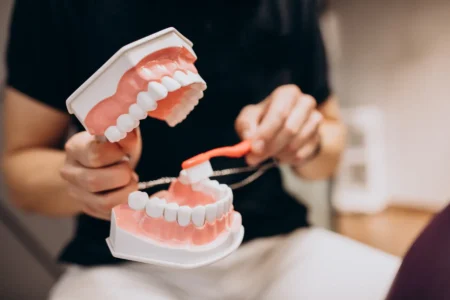
Most serious dental damage doesn’t come from one bad food or missed brushing. It comes from habits repeated daily. Things you barely notice. Things that feel harmless. Teeth don’t break suddenly. They wear down, weaken, and inflame slowly.
That’s why harmful habits matter more than occasional sugar.
Constant Snacking Keeps Teeth Under Attack
Teeth need recovery time. Every time you eat, bacteria produce acid. Saliva needs time to neutralize it. When you snack all day, that recovery never happens.
Even small, “healthy” snacks restart the acid cycle. Over time, enamel thins, sensitivity rises, and cavities form faster. It’s not about how much you eat. It’s about how often teeth are exposed.
Sipping Drinks For Hours Is Worse Than You Think
Coffee, tea, juice, soda, flavored water. When you sip slowly for hours, teeth sit in acid almost nonstop.
This is especially damaging because it feels gentle. There’s no obvious sweetness, no stickiness. But the exposure time is long, and enamel doesn’t get a break. Teeth remember duration more than intensity.
Brushing Too Hard Damages More Than It Protects
Many people think strong brushing equals better cleaning. In reality, aggressive brushing wears down enamel and pushes gums back.
Once gums recede, they don’t grow back. Exposed areas become sensitive and prone to decay. Damage from brushing often looks like “mysterious sensitivity,” not an obvious mistake.
Force doesn’t equal care. Technique does.
Ignoring Bleeding Gums Makes Problems Permanent
Bleeding gums are often dismissed as normal. They’re not.
Bleeding usually means inflammation caused by bacteria along the gum line. Ignoring it allows gum disease to progress quietly. Early stages are reversible. Later stages are not.
Gums are the foundation. When they fail, teeth lose support no matter how strong they look.
Using Teeth As Tools Adds Micro Damage
Opening packages, biting nails, holding objects. These actions seem minor, but they create tiny cracks in enamel.
Those cracks weaken teeth over time and increase the risk of chips and fractures. Teeth are strong, but they’re not designed for leverage. Repeated misuse shortens their lifespan.
Grinding And Clenching Destroy Teeth At Night
Many people grind or clench without realizing it. Stress, anxiety, and sleep issues often trigger it.
Grinding flattens teeth, creates cracks, and overloads the jaw. The damage builds silently until pain, headaches, or broken fillings appear. By then, the habit has already done years of work.
Uncontrolled pressure is one of the fastest ways to wear teeth down.
Skipping Dental Visits Lets Small Problems Grow
Avoiding checkups isn’t neutral. It gives problems time.
Cavities don’t heal. Gum disease doesn’t reverse on its own. What starts small becomes expensive and invasive later. Most serious dental treatments begin as problems that could have been easy fixes.
Teeth don’t warn loudly. They deteriorate quietly.
Teeth Reflect Patterns Not Intentions
Teeth don’t care about good intentions or occasional effort. They respond to patterns.
Daily habits shape enamel, gums, and bite more than genetics or luck. The good news is that habits work both ways. Small changes repeated consistently protect teeth better than extreme fixes after damage is done.
Healthy teeth aren’t built by avoiding one bad habit. They’re built by noticing the quiet ones and stopping them early.
Picture Credit: Freepik